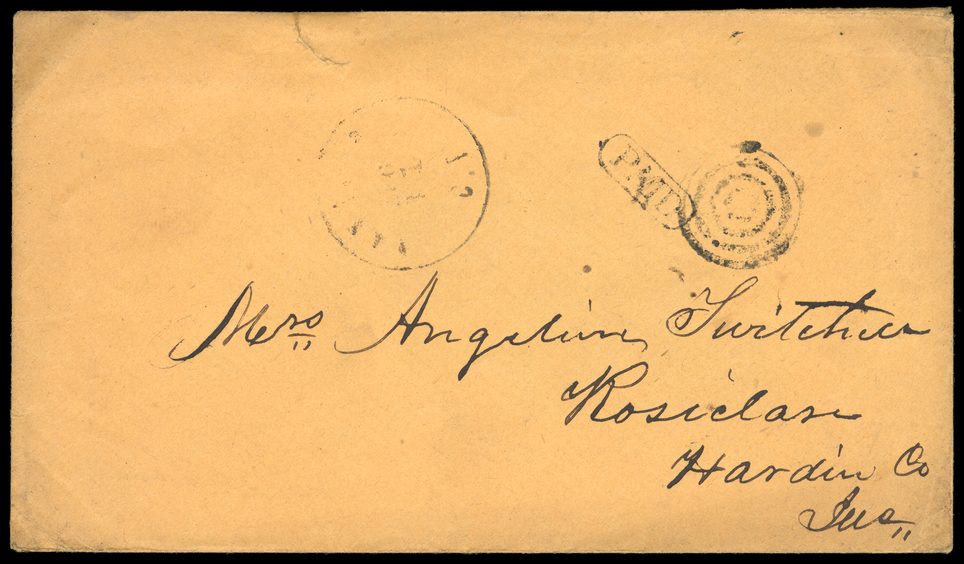
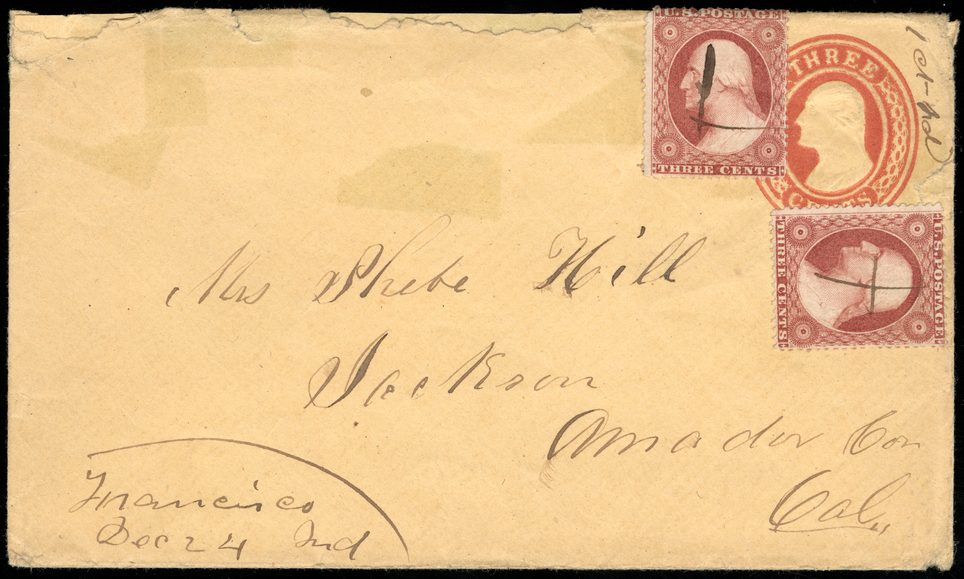
(Indiana) (Historic Letters Providing Account of John Brown's Raid on Harper's Ferry and Sinking of the S.S. "Central America") Francisco Ind. Dec 24,
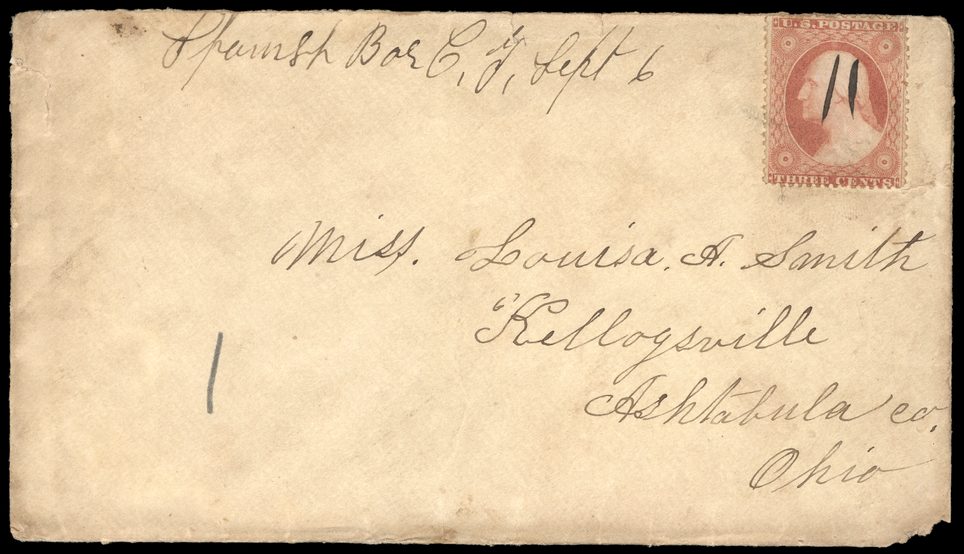
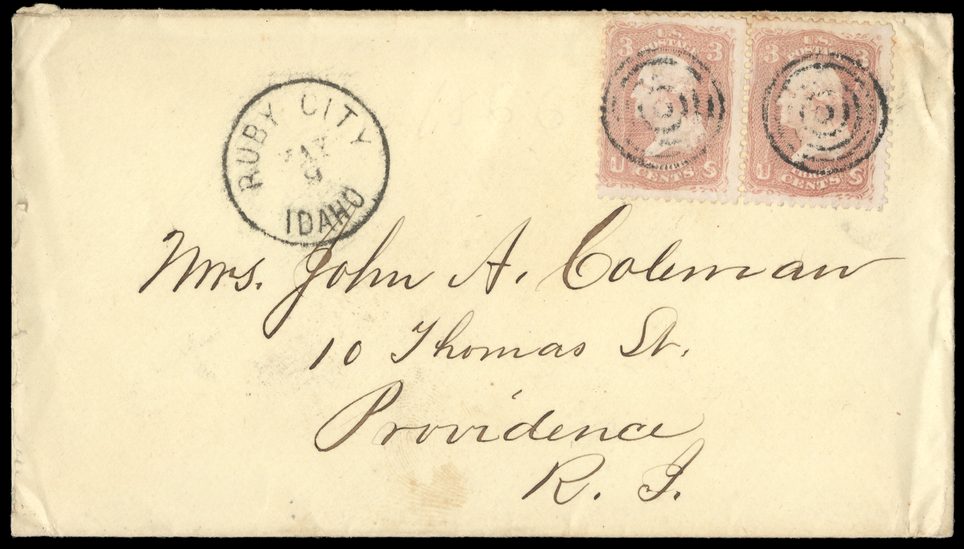
manuscript postmark at lower left on 1853-55 3¢ Nesbitt entire (U10) with two added 1857 3¢ adhesives (#26) and manuscript "1 ct Pd" making up the 10¢ rate for cover addressed to Jackson, Amador Co., Cal., with two letters; first datelined "Nov 6th 1859 Francisco, Gibson County, Ind." reads in part, "…we like to hear from our old neighbors at Jackson, who are in business, who are gone out, who have been hanged…I see you don't lack for exictioners [executioners]…finely become a murderer of Dr. Guinn and the pro Slavery side of Democracy…we have had a grand piece of excitement which you have in the papers, ere this reaches you. Some seventeen persons whites & niggers some say twenty two but as yet I see no account more than the number first stated who it appears had no particular implyment lately but assisting runaway niggers took it in their heads what they could do s bigger business so they went to Harpers Ferry between Virginia & Maryland and took the place of two thousand inhabitants and held them prisoners…Brown the leader of the gang says he is directed by Heaven to free all the niggers…Simon D."; second without date but 1857 based on contents noting the sinking of the Central America steamer, "Francisco, Gibson County, Ind." reads, in part, "…the boat struck the rock I did not no whether any of us would need the gold we had got, and had it met ax with the fait of the next vessel that left after we did it, but I suppose you have read the loss of the Sentrel America…"; cover opened roughly along top edge with a few tears, Fine.
PAIR OF LETTERS WITH GREAT HISTORIC CONTENT ABOUT HARPER'S FERRY IN ONE AND THE WRECK OF THE STEAMER CENTRAL AMERICA IN THE OTHER
John Brown's raid on Harpers Ferry took place from October 16-18, 1859. Led by abolitionist John Brown, a group of 21 men seized the federal armory and arsenal in Virginia (now West Virginia) in a failed attempt to initiate a slave uprising. This first letter, written Nov 6, 1859, provides an account of the event only a few weeks after it took place.