
The Dr. James Milgram Collection of Western Postal History
Lot 1112
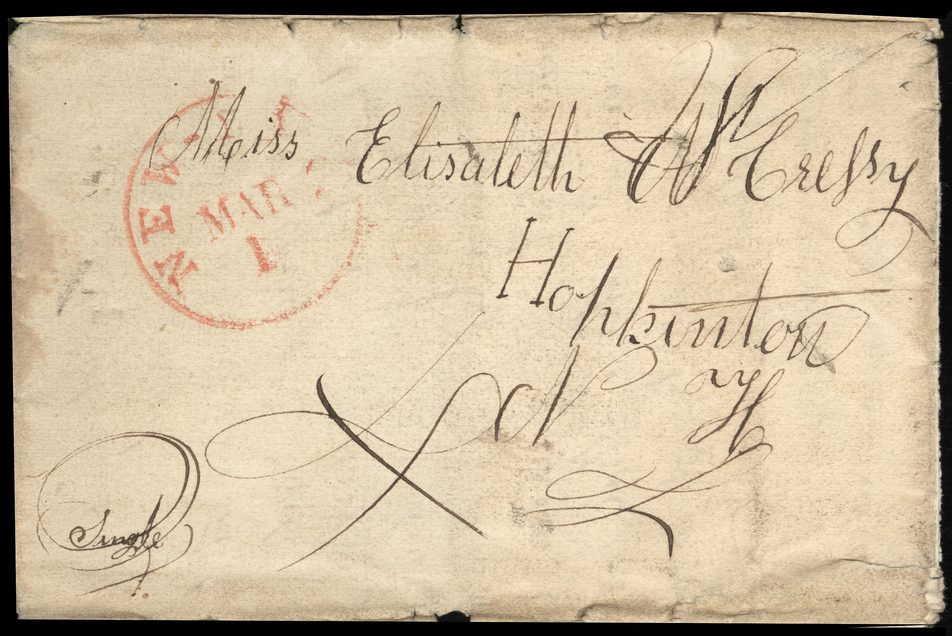
(Indian War) (Second Seminole War) East Florida, Ft. Wakerhoote, Jan the 7th, 1841,
dateline on folded letter entered the mails with red cds "New York Mar 1" with manuscript "Single" at lower left and large "X" addressed to Hopkinton, N.H., interesting letter writen by semi-literate soldier reads, in part, "…you will inquire whare I am and must I tell you or must I not methinks I must. I am two thousand miles from you in the Teritory of florida a fighting for my cuntry…here I am a soldier in florida fighting the red face sons of biches face to face and hunting them from their hamocks in wich thee are concealed to shooat down our men as thee pass along…there was three Lieutenant and ones wife and thee sargent Magor of our Reg coming from head Quarters past Micanopa wich was but 8 miles distance with an escort of 10 men when thee had got about half way thee were fired upon buy a party of indians and the sargent major was killed the veary first shot thee then gove them Battle but the indians being so menny more in number that the(y) soon surounded them two of the men scaped and the rest were inhumanly butcherd some thare heads cut of and some all to peces this yong woman had ben maried only about six weaks and had moved into florida only time enough to be tomahawk by the damnable blood thirsty rebels…If you write a letter to me you must direct to Fort Wakerhotee East Florida Company B you must remember to pay the postage on it because thare no post office nere here and tha will not send it along with tha have Theresienstadt pay…B.B. Cressy." some edge faults, Fine.
Estimate $1,000 - 1,500.
PERHAPS THE ONLY ITEM KNOWN FROM THIS OBSCURE FLORIDA FORT AND AN OUTSTANDING LETTER REGARDING THIS BRUTAL WAR
The Second Seminole War - also called the Florida War - was fought in Florida from 1835 to 1842 between the United States and groups collectively known as the Seminoles, which included Creek and Black Seminoles along with other allied tribes. It formed part of the broader series of conflicts known as the Seminole Wars. Often considered the longest and most expensive of America's Indian wars, the conflict grew out of rising tensions following the 1832 Treaty of Payne's Landing, which mandated the Seminoles' removal from Florida. Hostilities erupted with the Dade massacre in 1835. By the war's end in 1842, only a few hundred Indigenous people remained in Florida. Although no formal peace treaty was signed, Colonel William Jenkins Worth declared the war over on August 14, 1842.